
A rotary switch is an electromechanical device used to select one of many circuits by rotating a knob.
It operates by turning a spindle that connects a common terminal to different output contacts.
Rotary switches are commonly used in devices requiring multiple settings, such as radios or measurement instruments.
They can have multiple poles and positions, allowing complex circuit control.
These switches are valued for their durability, precision, and ease of use.
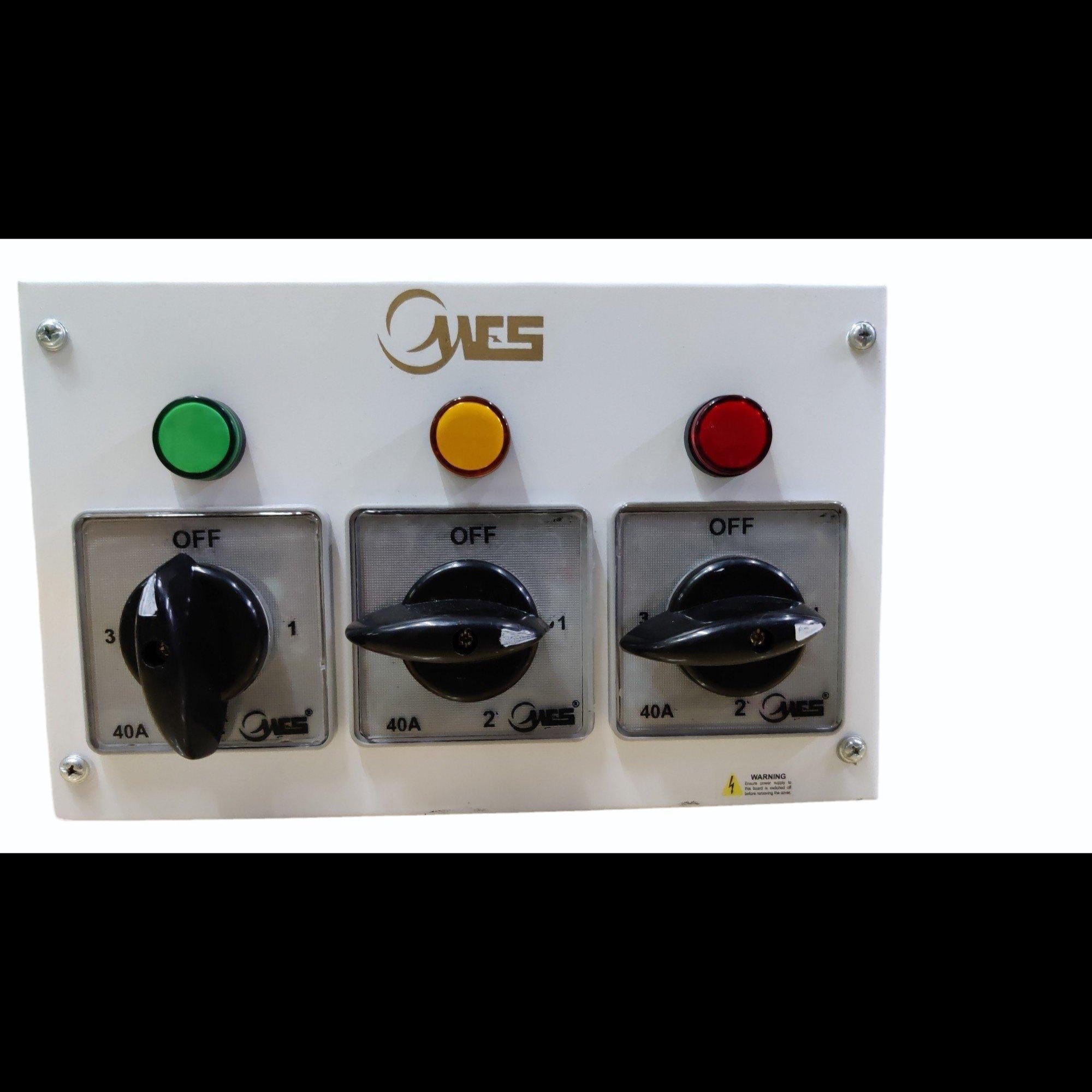
Industrial Selector Switches: Often black with, 2-4 positions, and found on electrical control panels.
Cam-Operated Switches: Used for power switching, typically featuring a sturdy, multi-level design (e.g., 2-pole or 4-pole configurations).
Adjustment Knobs/Dials: Frequently used as potentiometers or volume controllers on electronics.
Key Lock Switches: Used for secure switching.
Contact Configuration: Ranges from SPST, DPST, up to 4-pole or more (e.g., 1P-12Pos, 3P-4Pos).
Electrical Ratings:
Current (Ith): Common ratings are 10A, 16A, 25A, 40A, 63A, up to 600A.
Voltage (
U
e
𝑼
𝒆
): 250V AC, 440V AC, and 250V DC are standard.
Capacity: Rated for AC21/AC1 (resistive) or AC23A/AC3 (motor load).
Mechanical Specifications:
Positions: Typically 2 to 12 positions.
Indexing Angle: 15°, 30°, 45°, 60°, or 90° throw angles.
Torque: 6 to 80 mN-m (miniature) up to 11 Nm (power cam).
Mechanical Life: 50, 000 to 200, 000+ operations.
Operating Conditions:
Temperature: -25°C to +70°C (standard) or -40°C for specialized components.
IP Rating: Commonly IP55 or higher for industrial use.
Materials & Construction:
Terminals: Silver-plated for low resistance or gold/nickel-coated.
Housing: PBT or robust thermoplastics.
Action: Slow-break (AC) or Quick-make/break (DC).
Mounting Type: Panel mounting (screw/3/8-32 thread) or PCB through-hole.