
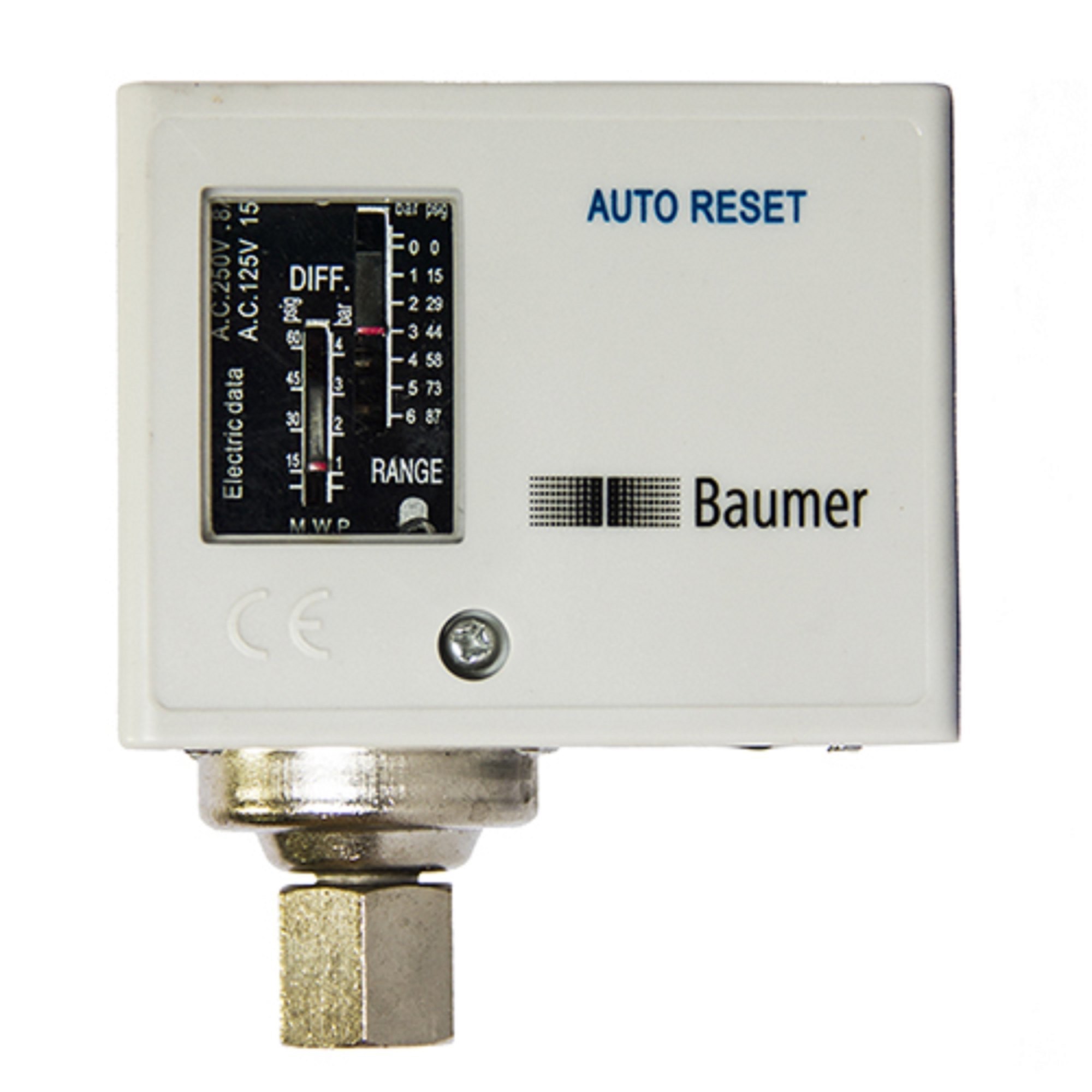
A pressure switch is a device used to monitor and control pressure levels in a system.
It operates by detecting changes in pressure and activating or deactivating an electrical contact.
Pressure switches are commonly used in industrial, commercial, and residential applications.
They help maintain safe operating conditions by preventing overpressure or underpressure.
These switches can be designed for liquids, gases, or air systems.
They are often used in pumps, compressors, and HVAC systems.A pressure switch is an electromechanical or electronic device that monitors system pressure and opens or closes an electrical contact when a predetermined set point is reached. Used to control pumps, compressors, or alarms, they maintain system pressures and protect equipment. Key specs include operating pressure range, switching differential (hysteresis), and electrical load capacity.
A pressure switch typically consists of a sensing element, a spring mechanism, and electrical contacts.
The setpoint can usually be adjusted to trigger the switch at a desired pressure level.
They are available in different types such as mechanical and electronic pressure switches.
Overall, pressure switches play a crucial role in automation and safety control systems.
Pressure Range 0–4 bar
Pressure Switch Type Diaphragm Pressure Switch
Media Oil
Contact Type SPDT
Switch Type Mechanical
Setpoint Type Adjustable Screw
Enclosure Rating IP54
IP Rating IP 66
Mounting Type wall mounted, vertical mount
Ports 1
APPLICATIONS
· HYDRAULICS AND PNEUMATICS
· STEEL
· POWER
· SPECIAL PURPOSE MACHINE