
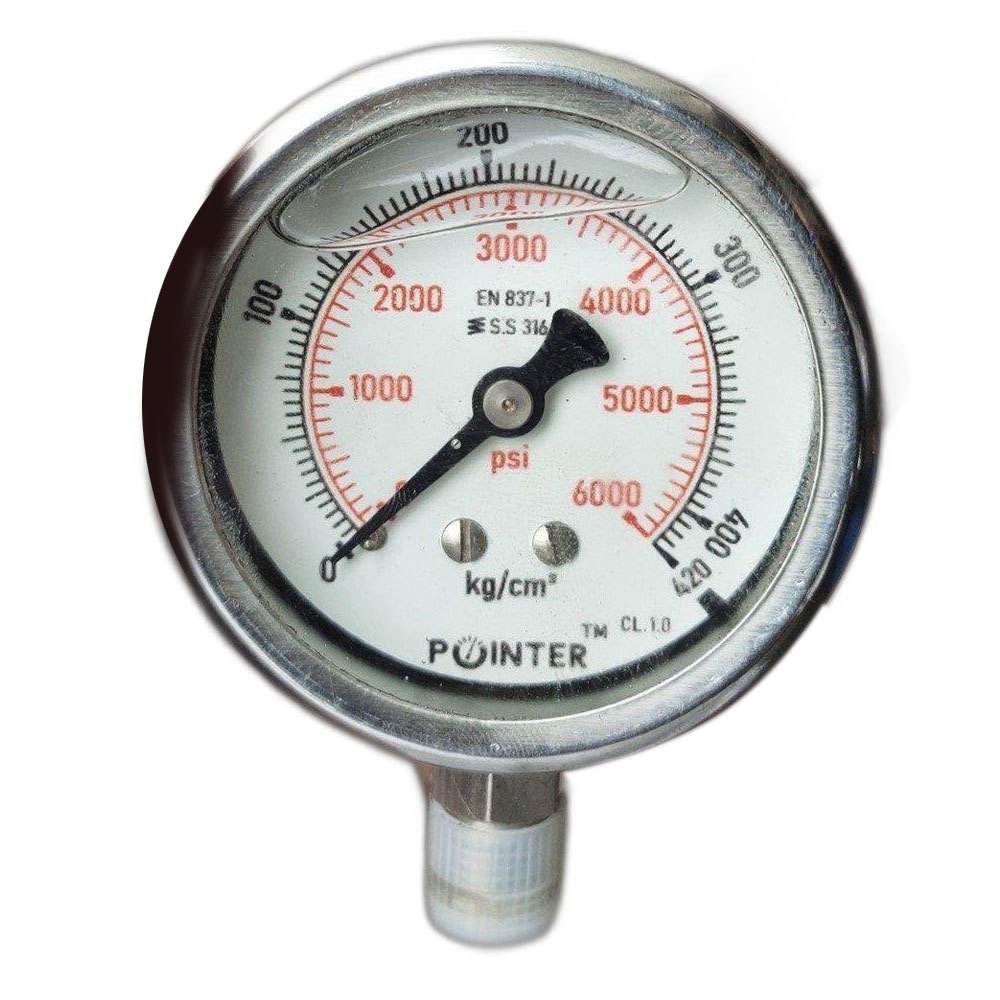
A hydraulic pressure gauge is used to measure pressure in hydraulic systems.
It helps monitor the force exerted by fluids in machinery and equipment.
These gauges are essential for maintaining safe and efficient system operation.
They typically use a Bourdon tube mechanism to sense pressure changes.
The measured pressure is displayed on an analog dial or digital screen.
Hydraulic pressure gauges are widely used in construction and industrial machinery.
Common applications include hydraulic presses, lifts, and heavy equipment.
They assist in detecting system faults such as leaks or blockages.
The gauges are designed to withstand high pressures and harsh conditions.
They are often made with durable materials like stainless steel or brass.
Many models include liquid filling to reduce vibration and needle fluctuation.
They provide accurate and reliable readings over long periods.
Different pressure ranges are available to suit specific applications.
They are easy to install and require minimal maintenance.
Overall, hydraulic pressure gauges play a crucial role in system monitoring and safety.
Dial Size 4 inch / 100 mm
Connection Type BSP
Brand WIKA
Connection Size 1/2 inch
Use Liquid
Display Type Analog
Pressure Type Gauge Pressure
Gauge Secondary Range Units 213.
Pressure Range: Available in wide ranges such as 0–100 bar, 0–400 bar, or higher for heavy-duty systems.
Accuracy Class: Typically ±1.0%, ±1.6%, or ±2.5% of full-scale value.
Dial Size: Common sizes include 63 mm, 100 mm, and 150 mm for clear visibility.
Case Material: Usually stainless steel, mild steel, or ABS for durability.
Wetted Parts Material: Components in contact with fluid are often brass, phosphor bronze, or stainless steel.
Connection Type: Bottom or back entry with standard threads like 1/4“, 3/8“, or 1/2“ BSP/NPT.
Filling Liquid: Glycerin or silicone oil filling to dampen vibrations and pulsations.
Operating Temperature Range: Suitable for environments typically from -20°C to +60°C or higher.
Ingress Protection (IP Rating): Commonly IP65 or above for dust and water resistance.
Overpressure Limit: Ability to withstand pressures above the rated range without damage (e.g., 130% of full scale).