
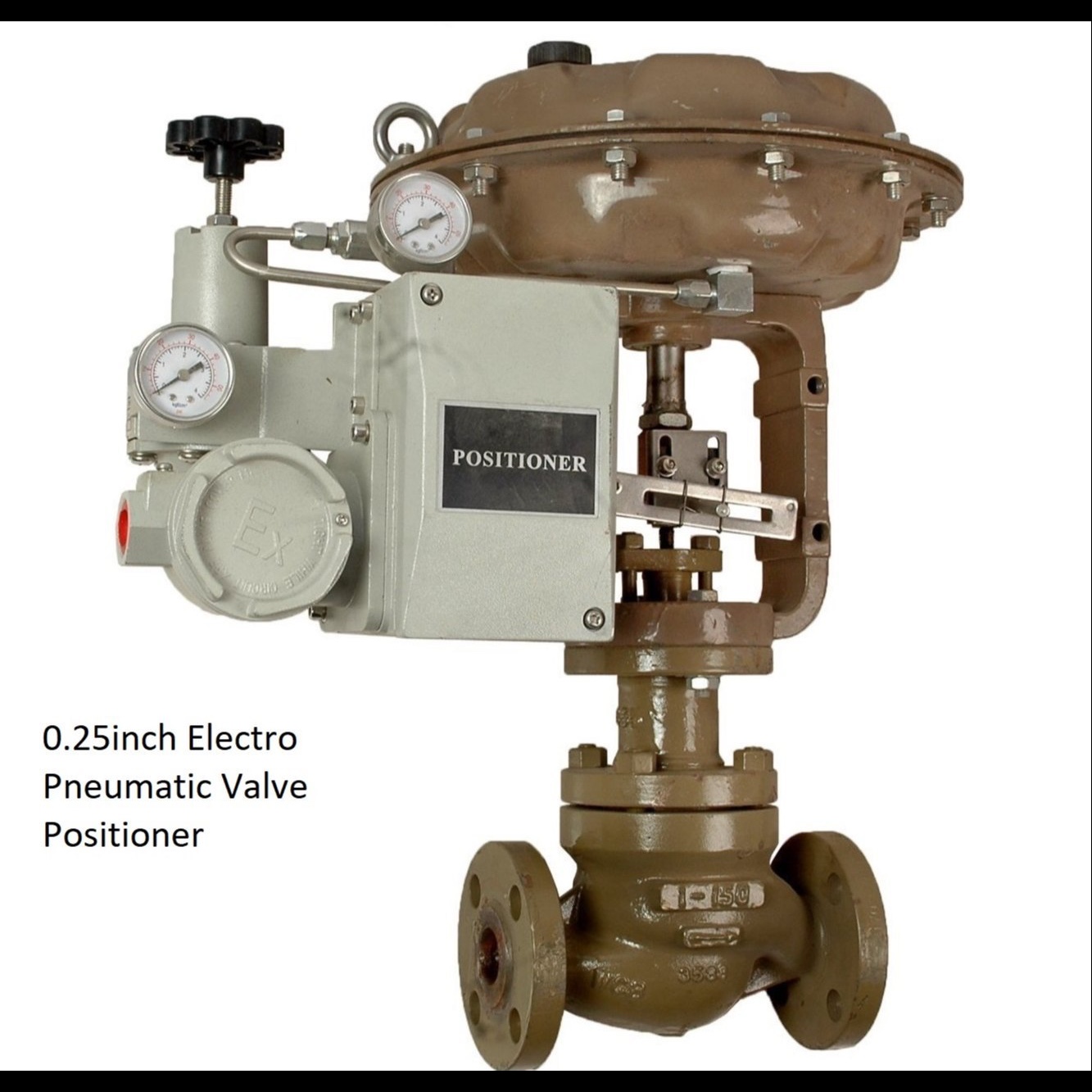
An electro pneumatic valve positioner is a device used to control the position of a control valve.
It converts an electrical input signal into a pneumatic output signal.
The positioner ensures accurate valve movement according to the control signal.
It is widely used in industrial automation systems.
The device improves the precision and efficiency of control valves.
It receives signals such as 4–20 mA from a controller.
The pneumatic output adjusts the actuator pressure.
Valve positioners help reduce response time in process control.
They are commonly used in chemical and power plants.
Electro pneumatic positioners provide stable and reliable valve operation.
They can operate with single-acting or double-acting actuators.
The device minimizes valve hysteresis and friction effects.
Many modern positioners include digital communication features.
Some models support HART or Fieldbus protocols.
The positioner continuously compares valve position with the input signal.
Any difference is corrected automatically by adjusting air pressure.
It improves process accuracy and system safety.
Electro pneumatic positioners are compact and easy to install.
Regular calibration ensures proper functioning and long service life.
The device is essential for efficient and precise industrial flow control.
Smart
Input Signal 4 20 mA
Mounting Type Linear
Action Double acting
Enclosure Intrinsically safe
Supply Pressure 4 bar
Output Signal HART
Explosion Class Ex ia IIC
For linear and rotary actuators
Input: 4–20 mA standard signal
Built-in feedback sensor for valve position
High accuracy: ±0.5% of stroke
Self-monitoring, diagnostics, and calibration
Input: 4–20 mA or digital control
Input signal range: 4–20 mA DC electrical signal.
Output signal: Pneumatic pressure for valve actuator control.
Operating air supply pressure: Typically 1.4 to 7 bar.
Compatible with single-acting and double-acting actuators.
High positioning accuracy and fast response time.
Low air consumption for efficient operation.
Weatherproof and corrosion-resistant enclosure design.
Supports communication protocols like HART or Fieldbus.
Operating temperature range suitable for industrial environments.