
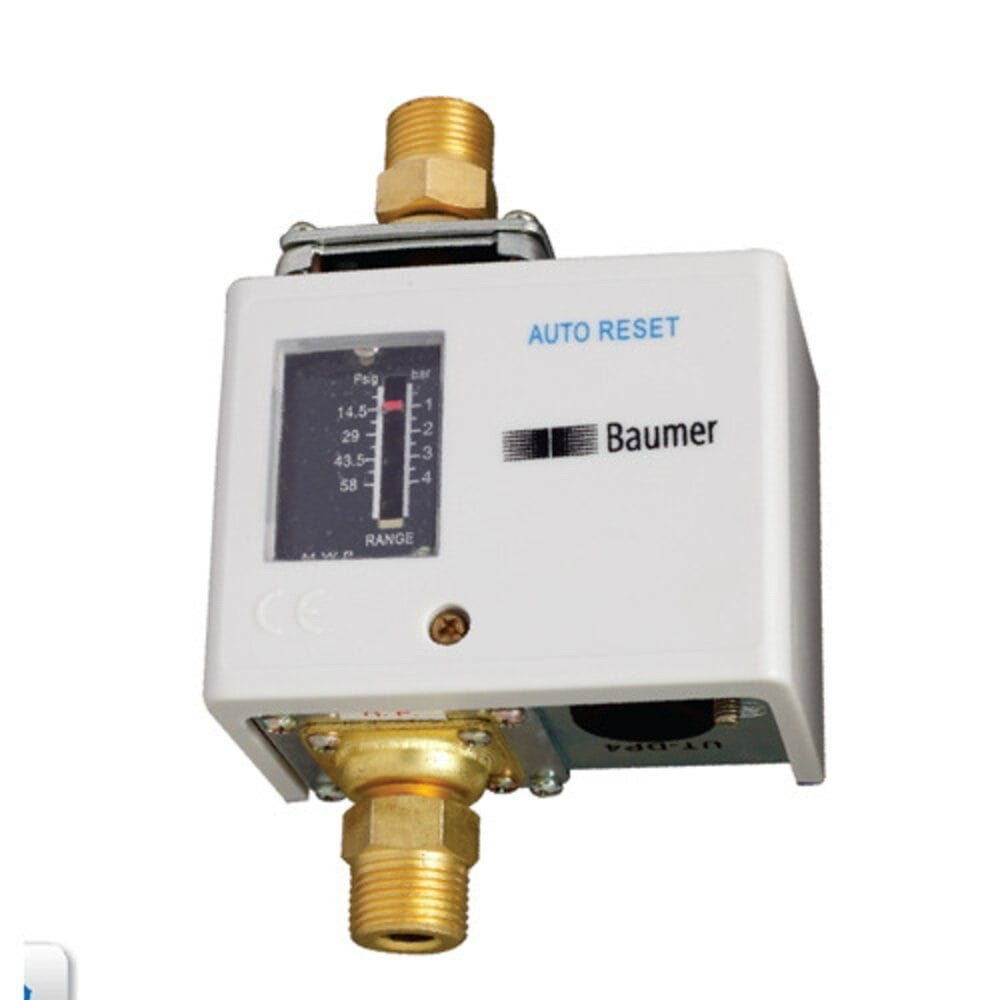
A differential pressure switch is a device used to measure the difference in pressure between two points in a system.
It activates an electrical contact when the pressure difference reaches a preset value.
These switches are widely used in air, gas, and liquid flow systems.
They help monitor filters by detecting pressure drops across them.
Differential pressure switches are commonly used in HVAC and industrial applications.
They ensure proper airflow and system efficiency by signaling blockages or leaks.
The device typically has two pressure ports connected to different sections of a system.
An internal sensing element responds to the pressure difference between these ports.
The setpoint can be adjusted to trigger the switch at a specific differential pressure.
Overall, differential pressure switches are important for system control, monitoring, and safety.A differential pressure switch is a mechanical device that monitors the pressure difference (
between two ports, triggering an electrical contact when the differential rises above or falls below a setpoint. It is commonly used in HVAC for filter monitoring, airflow validation, and pump/compressor control. Key features include field-adjustable setpoints, high repeatability
Differential Range 10–50 bar
Pressure Switch Type Differential Pressure Switch
Media Gas
Contact Type SPDT
Setpoint Type Adjustable Screw
Enclosure Rating IP54
Max Working Pressure 10 bar
Media Type Gas
IP Rating IP66
Sensing Element from -1 ... +700 bar
APPLICATIONS
· POWER GENERATION
· WASTE WATER MANAGEMENT
· OIL AND GAS
· PETROCHEMICAL INDUSTRIES