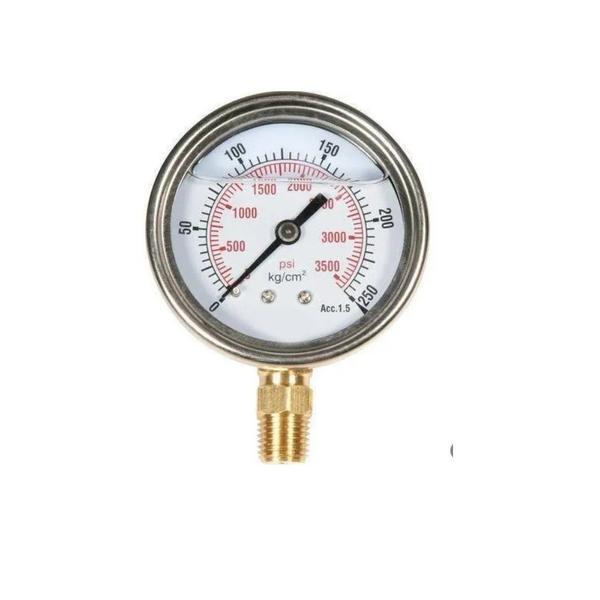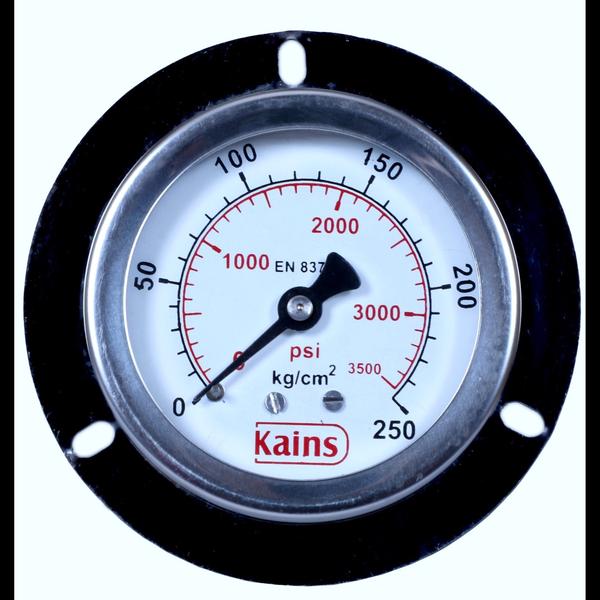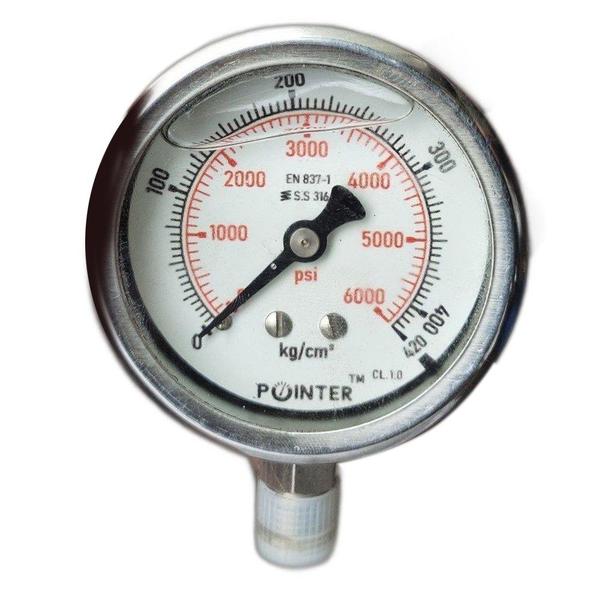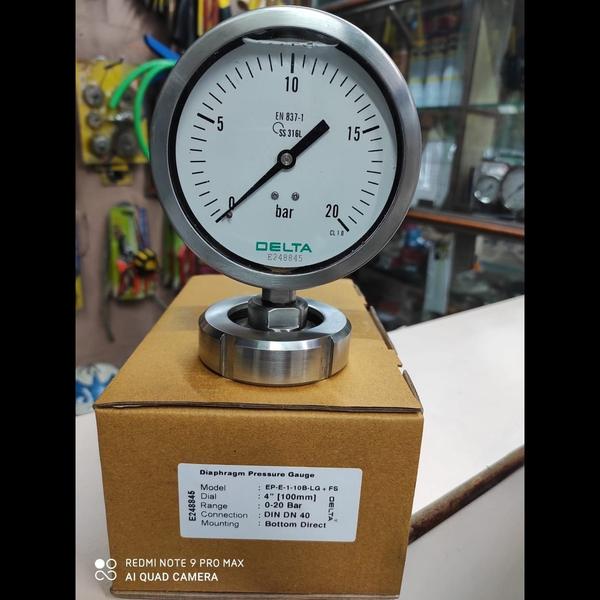

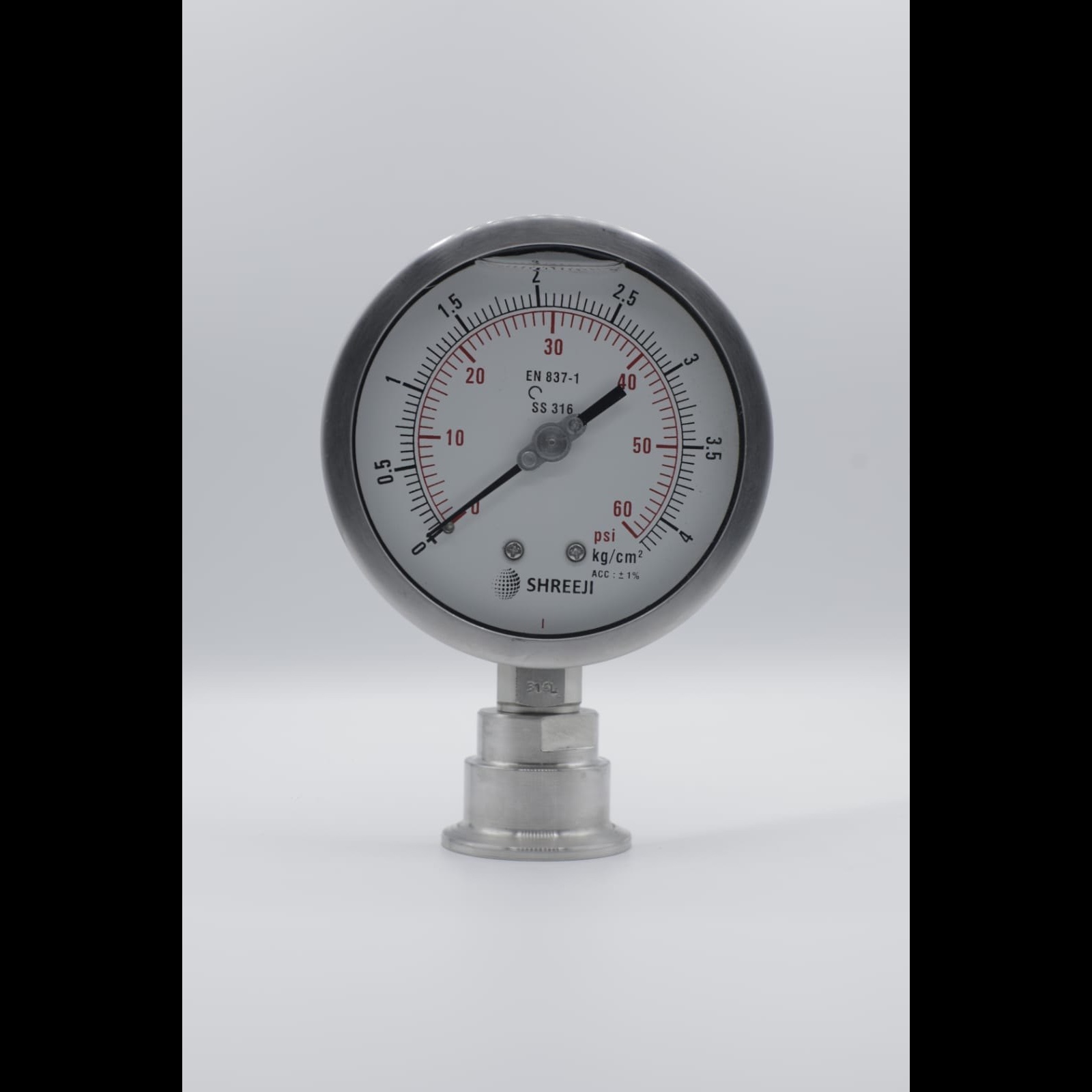
A Capsule Pressure Gauge is a device used to measure very low pressure of gases. It consists of two thin, corrugated metal diaphragms joined together to form a capsule. When pressure is applied, the capsule expands or contracts. This movement is proportional to the pressure difference. The displacement of the capsule is transmitted through a linkage mechanism. The linkage moves a pointer across a calibrated dial to indicate pressure. It is highly sensitive and suitable for low-pressure applications. Capsule gauges are commonly used in HVAC systems and laboratory instruments. They are mainly designed for clean, dry gases rather than liquids. Overall, it is an accurate instrument for measuring small pressure variations.A capsule pressure gauge is a specialized instrument designed for measuring very low pressures (vacuum to 600 mbar) of gaseous, non-viscous, and non-corrosive media. It uses a, a “capsule“ element—two corrugated diaphragms welded together—which expands or contracts under pressure, offering high sensitivity and, frequently, up to 50x full-scale overload protection
Standard
Diaphragm and capsule pressure gauges EN 837-3
→ For information on the “Selection, installation, handling and operation of pressure gauges”, see Technical information IN 00.05.
Nominal size (NS) ■ Ø 100 mm [4“]
■ Ø 160 mm [6“]
Window Laminated safety glass
Case Safety level “S1” per EN 837-1: With blow-out device
Material ■ Stainless steel 1.4301 (304)
■ Stainless steel 1.4571 (316 Ti)
Ring Bayonet ring, stainless steel
Movement Stainless steel
Measuring element
Type of measuring element Capsule element
Materials (wetted)
Capsule element Stainless steel 1.4571 (316 Ti)
Measuring chamber Stainless steel 1.4571 (316 Ti)
Sealing PTFE
Process connection Stainless steel 1.4571 (316 Ti)
Accuracy specifications
Accuracy class ■ 1.6
■ 1.0 1)
■ 0.6 1)
Zero point setting Setting by means of adjustable pointer
Temperature error On deviation from the reference conditions at the measuring system: ≤ ±0.6 % per
10 °C [≤ ±0.6 % per