
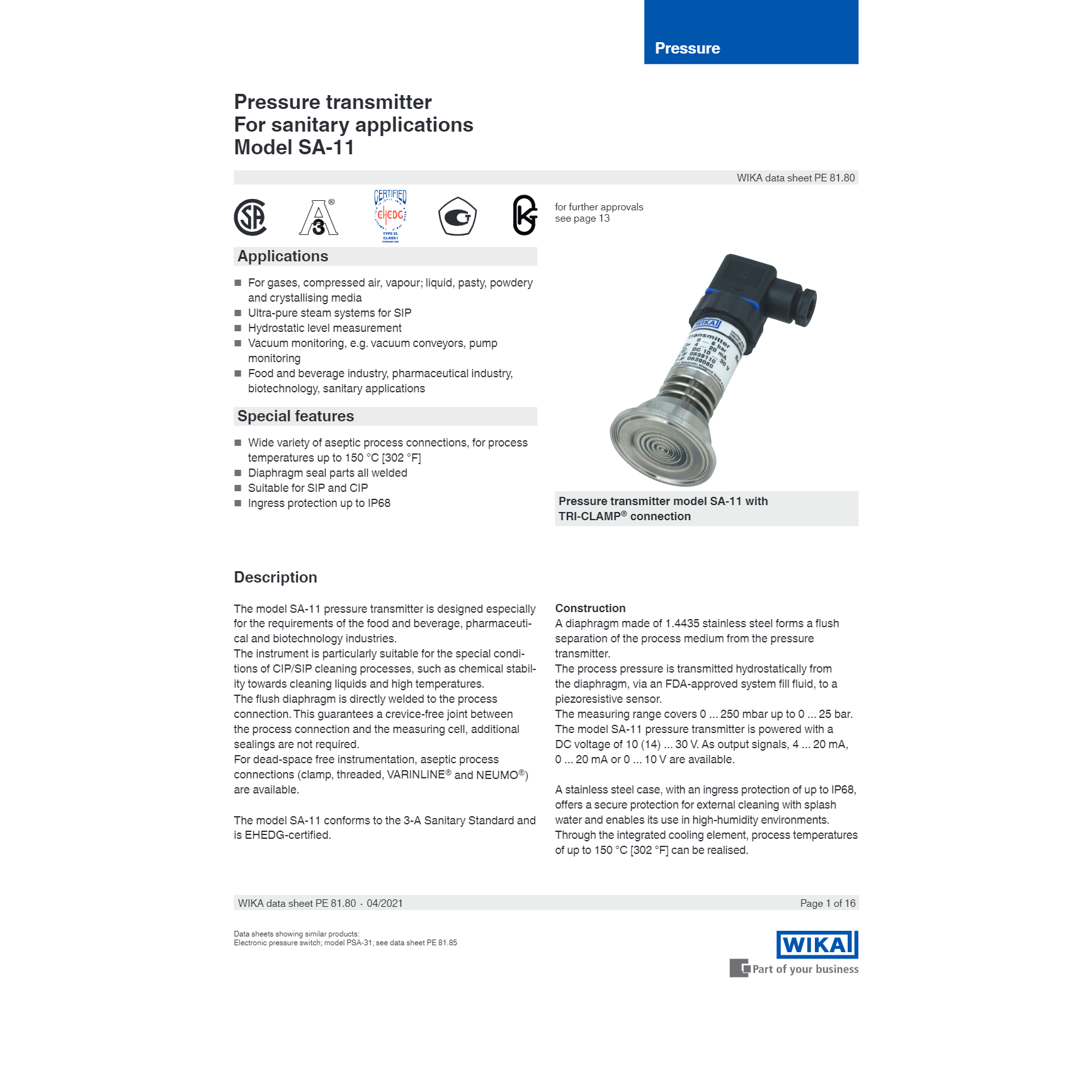
A pressure sensor for sanitary applications is designed to measure pressure in hygienic environments.
It is widely used in the food, beverage, pharmaceutical, and biotechnology industries.
These sensors are manufactured using stainless steel materials to prevent contamination.
The smooth surface finish allows easy cleaning and sterilization.
Sanitary pressure sensors comply with hygiene standards such as FDA and EHEDG.
They are resistant to corrosion, moisture, and harsh cleaning chemicals.
The sensor accurately converts pressure into an electrical output signal.
It can measure gauge, absolute, or differential pressure.
Flush diaphragm designs eliminate dead spaces where bacteria may grow.
These sensors support Clean-in-Place (CIP) and Sterilize-in-Place (SIP) processes.
High accuracy and reliability make them suitable for critical process control.
They can operate under high temperatures and pressure variations.
Compact construction allows installation in pipelines and tanks.
The sensors provide stable performance even in demanding industrial conditions.
Various output options such as 4–20 mA and digital communication are available.
They help maintain product quality and process safety.
Sanitary pressure sensors reduce maintenance and downtime costs.
Advanced models include temperature compensation for precise readings.
They are essential for monitoring liquid, gas, and viscous media in hygienic systems.
Overall, sanitary pressure sensors ensure accurate pressure measurement while maintaining strict hygiene standards.
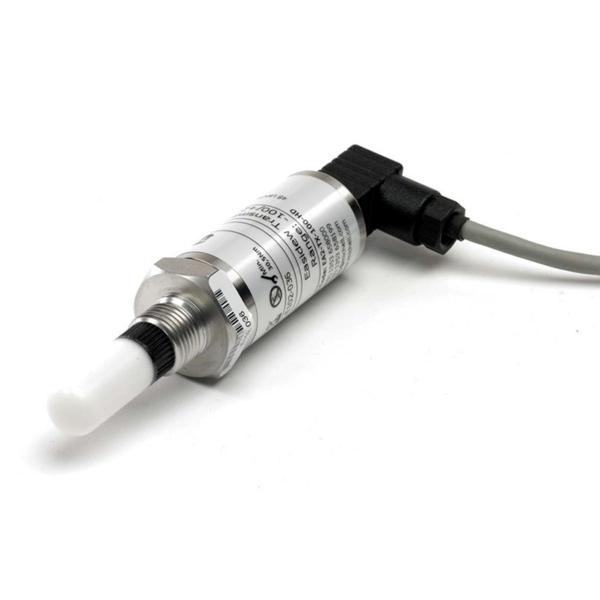
Sensor Type PRESSURE TRANSMITTER MODEL SA-11
Pressure Range 25 bar (362 psi)
Output Signal 0-5 V
Pressure Type Gauge
Media Viscous Media
Process Connection G1/2 Inch
Brand Name WIKA
Housing Material Stainless Steel
Electrical Connection DIN Connector
Application Food & Beverage