
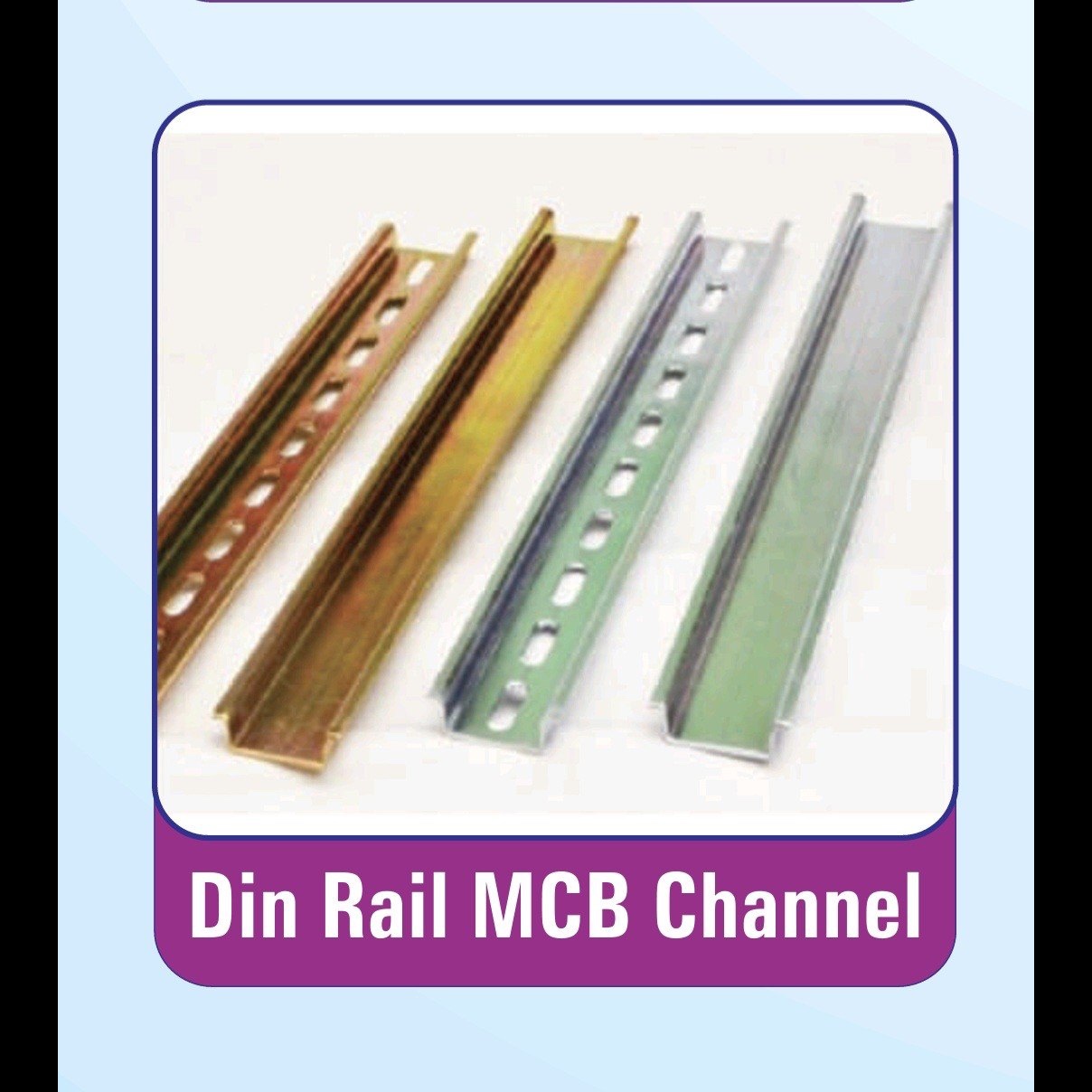
DIN rails are standardized metal rails (usually 35mm wide) used for mounting industrial control equipment, conforming to EN 60715 and DIN 46277 standards.DIN Rails are standardized metal rails used for mounting electrical and industrial control components.
They are typically made of steel or aluminum and installed inside control panels or enclosures.
DIN rails allow easy installation and removal of devices like MCBs, relays, and terminal blocks.
They help organize components neatly and improve wiring efficiency.
DIN rails are widely used in electrical panels, automation systems, and industrial applications.
Top Hat Rail (TS35): The most widely used standard.
Width: 35 mm.
Depth (Standard): 7.5 mm, suitable for most lightweight control components like circuit breakers.
Depth (Deep/High): 15 mm, providing higher rigidity for heavier devices such as power supplies or transformers.
Miniature Top Hat (TS15): Used where space is a premium.
Width: 15 mm.
Depth: Typically 5.5 mm.
G-Type Rail (TS32): An asymmetrical profile used for heavy-duty components.
Width: 32 mm.
Design: One side is deeper than the other to provide robust mechanical support and prevent backward installation.
C-Type Rail: A symmetrical, inward-curved profile, often found in older installations.
Width: 32 mm.
Common Variants: Classified by height (C20, C30, C40, C50).
Wikipedia